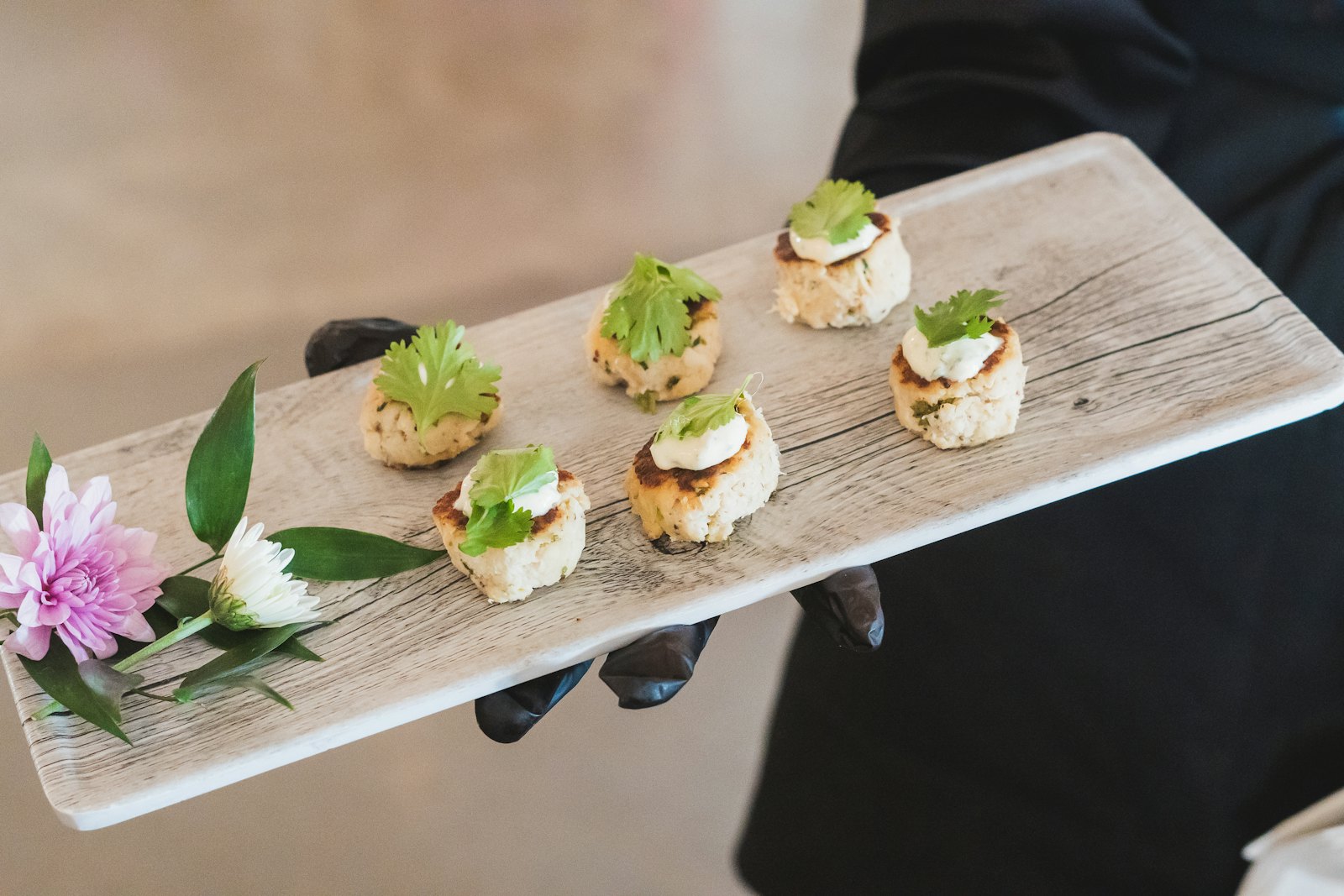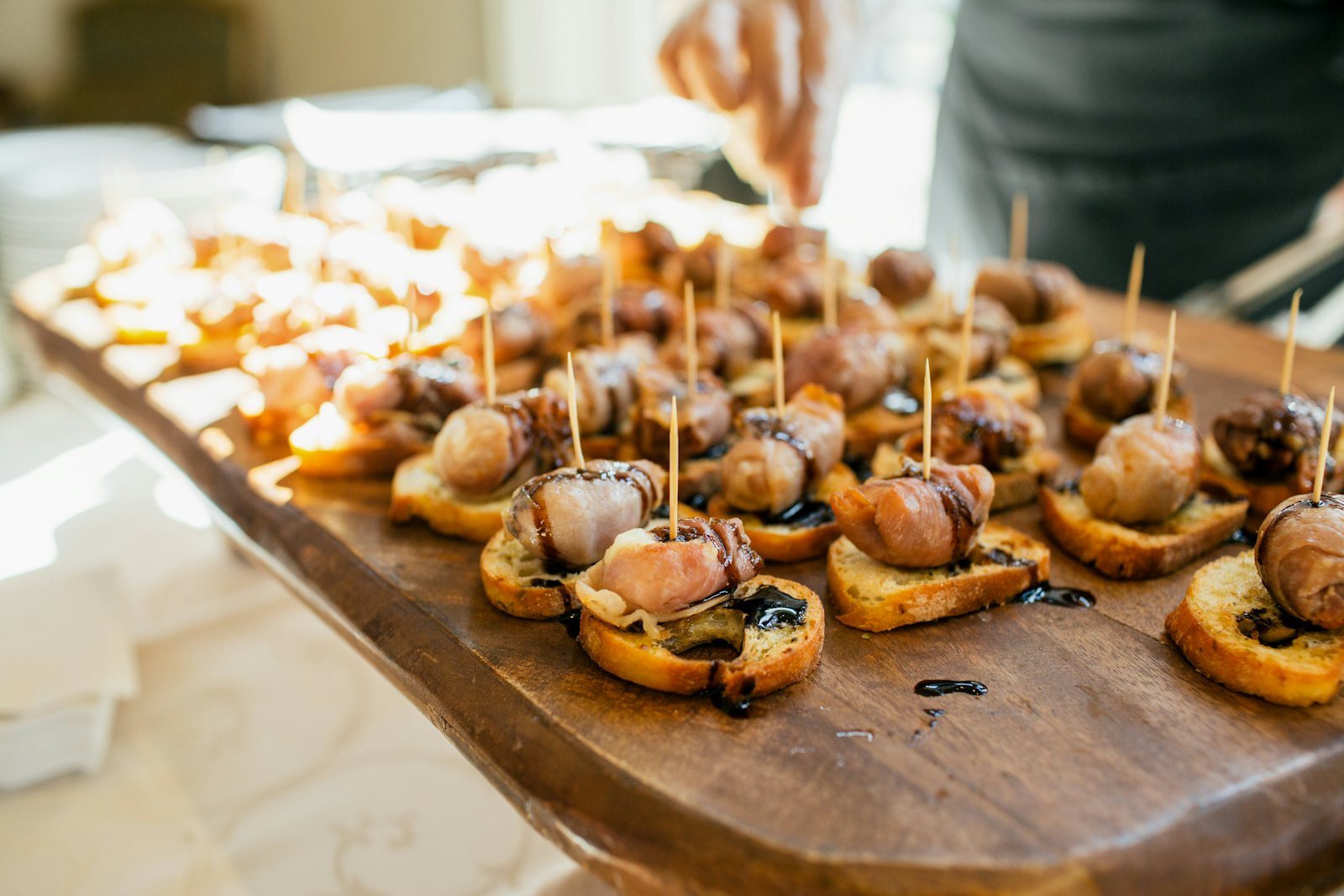
A bowl of samples on a counter is a giveaway. A flight — three to five small things, in a stated order, with a reason for the order — is an experience, and the difference in attention is enormous for roughly the same food cost.
Here is how to build one that works operationally.
Start from the service rate, not the menu
Decide first how many people you must serve per hour. That single number constrains everything.
| Target | Realistic format |
|---|---|
| Up to 60/hour | Plated flight, one server, conversation at each serve |
| 60–150/hour | Pre-portioned flight on a tray or board, two servers |
| 150–300/hour | Single item, pre-portioned, handed over, no assembly |
| 300+/hour | Packaged item, self-serve from a chilled display |
Most brands design a 60-per-hour experience and then hope for 250 visitors an hour. The queue forms, the staff rush, and the thing you designed stops happening by eleven o'clock.
Five bites, four jobs
A good flight does four things in sequence:
- Open with the familiar. Something the visitor recognises, so they commit.
- Introduce the variable. The one thing your brand changes — the ingredient, the process, the origin.
- Make the contrast explicit. The same thing with and without, side by side. This is the bite that does the explaining.
- Close with the best one. Finish on the item you would want them to buy.
A fifth, optional: something to take away, which extends the memory past the counter.
Keep each portion genuinely small. A flight that fills someone up ends the conversation and halves your throughput.
The constraints that decide the menu
Power and water. Most activation sites give you a single 16 A socket and no water. That rules out most hot cooking and all dishwashing. Design for cold, ambient or a single induction point.
Allergens. You must be able to state the allergens in every item, in writing, at the counter. This is a legal duty in most of Europe and a practical one everywhere. It also means fewer components: a five-ingredient bite is easy to declare, a twelve-ingredient one is not.
Holding time. How long can the item sit on the counter looking good? If the answer is under twenty minutes, you need either a chilled display or a service rate that empties the tray.
Waste. Plates, cups, picks and napkins at 400 covers a day is a real volume. Agree the waste stream with the venue before you choose the serviceware.
Two metres of counter
A workable layout, left to right: clean stock → assembly → serve point → bin. One direction of travel, so used and unused never cross. Behind: chilled storage and a hand-wash point.
That is it. Any layout where a server has to turn around twice per cover will fail at volume.
Staffing
Two people minimum: one serving, one replenishing. At above 150 an hour, three — because one person must be doing nothing but assembly, continuously.
Brief them on the story of the flight, in one sentence per bite. A server who can say "this one is the same recipe without the step we added" is doing the work the activation was built for.
Where to get the recipes right
The hardest part is not the concept, it is the exact measurements that make a bite work identically on the four hundredth serve as on the first. That is recipe development, and it is a different craft from event design — tested, measured recipes that scale are worth more here than an ambitious menu that drifts after an hour.
Related reading: catering a 300-guest launch covers the same problem at full-meal scale.