A character that works beautifully on packaging can look thin on a stand. The hall is enormous, the lighting is flat and bright, and everything is competing. Scale and material do most of the work, and both are decided at stand design stage, not afterwards.
Three sizes, three jobs
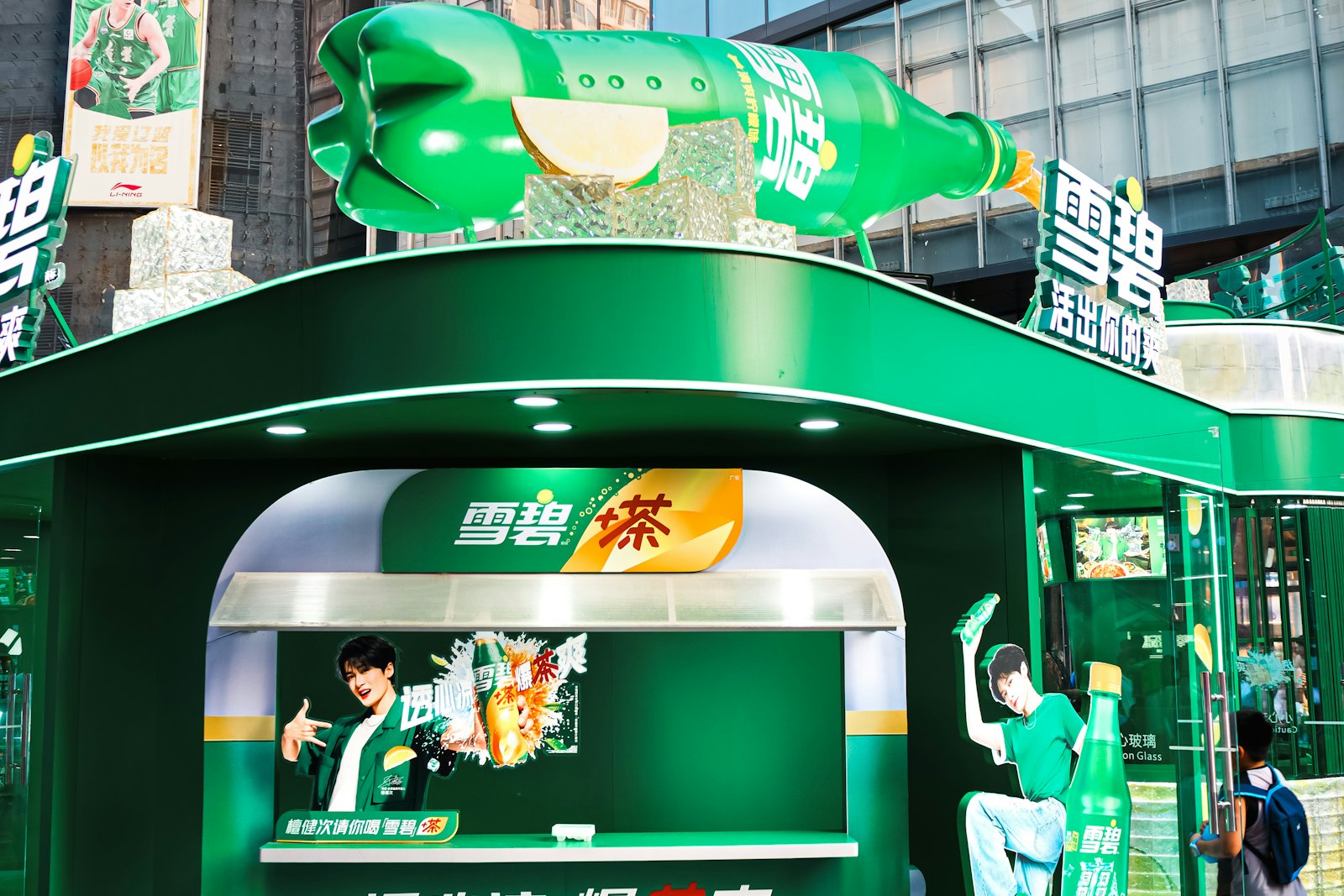
Hall scale — 2.5 m and above. This is the version seen from the aisle. It needs a strong silhouette and almost no detail, because detail disappears at distance. If your character's recognisability depends on its face, it will not survive this.
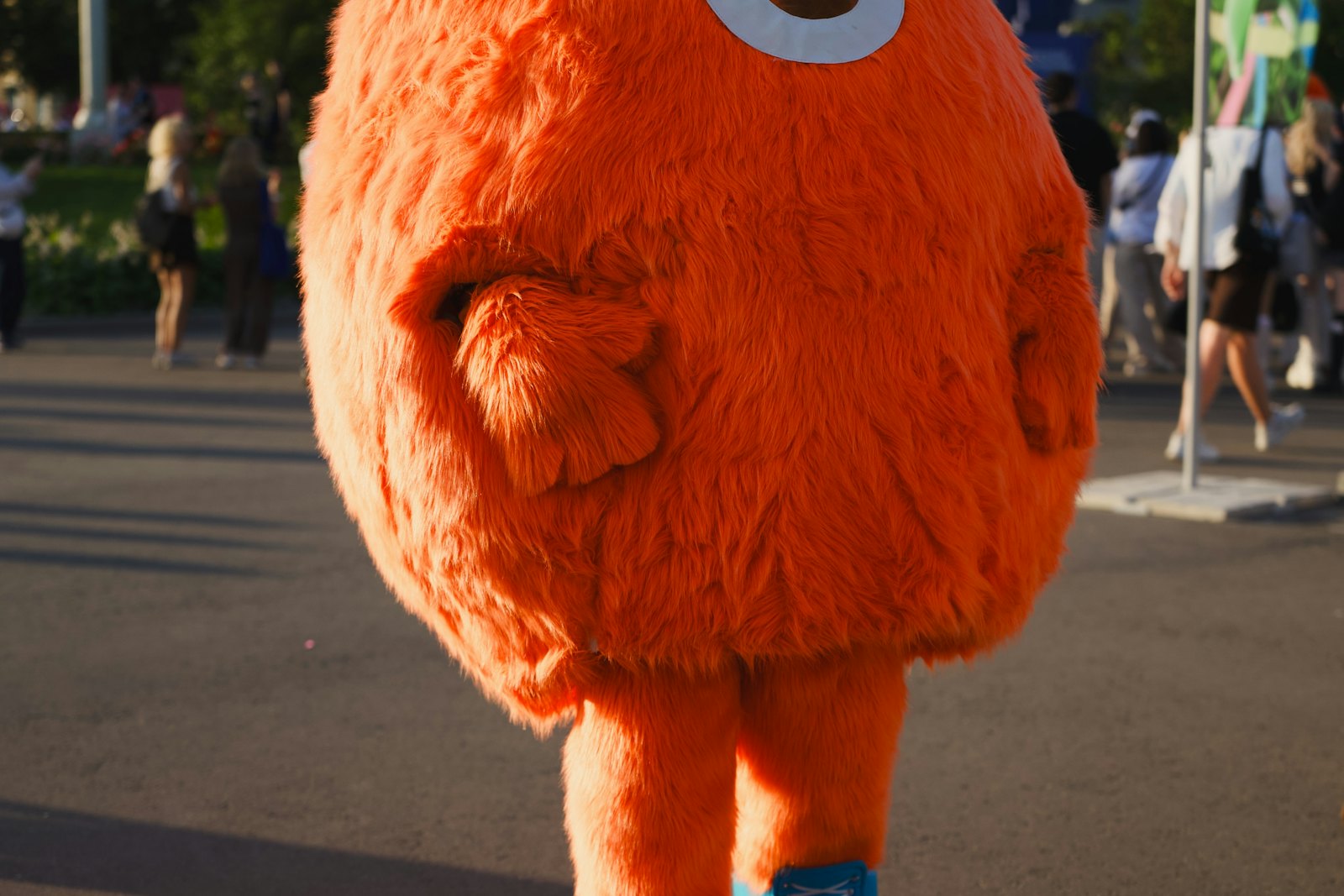
Human scale — 1.6–1.9 m. The photo partner. Someone stands beside it. This is the single highest-value use of a character on a stand, and the one that generates content you do not pay for.
Hand scale — under 40 cm. The thing on the counter, the giveaway, the detail. Where personality lives.
Use at most two of the three. All three at once reads as merchandise.
Material decides whether it looks cheap
The three mistakes, in order of frequency:
1. Printed flat on foam board. A 2 m character cut out of 10 mm foam is the single most common and most damaging choice. It reads as a cardboard cut-out from three metres because that is what it is. If budget forces a flat, make it deliberately flat — a graphic panel, part of the wall, not pretending to be an object.
2. Unlit. Halls are lit from above with flat white light. An unlit three-dimensional character casts ugly downward shadows across its own face. Light it from the front, low, warm. This is one fixture and it transforms the object.
3. Wrong finish. Glossy paint shows every fingerprint and every seam under hall lighting. Matte or satin, always. And it will be touched — thousands of times across three days — so specify a finish that survives handling and plan for it to be cleaned nightly.
For a human-scale figure, CNC-milled foam with a hard coat and sprayed finish is the standard and it looks it. A 3D-printed assembly works at hand scale and starts showing layer lines above about a metre.
Designing the photo moment
A character beside a stand is a photo opportunity. A designed photo moment is a marketing channel. The difference:
- Clear floor in front, out of the main circulation route, so people are not blocking the aisle to take a picture.
- A background that reads, with the brand in frame but not dominating. The visitor must want to post it.
- Lighting that works for a phone camera — front-lit, no strong backlight, no deep shadow under the eyes.
- A reason to stand in a specific spot, marked on the floor. People will not guess.
- A short hashtag or handle on a small sign at knee height, visible to the photographer, invisible in the frame.
Measure this: count photos taken, not footfall past.
If there is also a costume
Everything in the mascot or character question applies, plus two hall-specific points:
- Agree the roaming area with the organiser. Many halls restrict performers to your own stand footprint, and some require notification. Find out before you book two performers for three days.
- Give the performer a base. A chair, water and a screened place to take the head off, inside the stand. Without it, the character is visibly off-duty in the aisle, which undoes the illusion for everyone who sees it.
The integration test
Look at the stand drawing with the character removed. If the stand looks worse, the character is doing structural work and it is well placed. If the stand looks the same, the character is decoration — which can still be worth it, but price it as decoration and site it where it does not compete with the demo.
Related reading: what a trade fair stand costs in Germany — a character at hall scale is a build line, not a marketing line.